.png)
REDPRINT: The Ottawa Fashion Experience and SAI FI's International Debut

Inside SAI-FI’s annual fashion experience and the emerging North American network it is building from Ottawa.

Fashion has always been about being seen. But for emerging designers, models and creatives, visibility is only the first transaction. The more consequential question is what happens after the show. Who remembers the work? Who has access to it? Perhaps most importantly, does the room created for emerging talent actually lead somewhere beyond the moment?
REDPRINT, SAI-FI’s annual fashion experience in Ottawa, approaches that question with a premise that feels increasingly relevant to the way fashion’s next generation is building its own infrastructure: visibility has the most value when it creates access.

Evolving from the 2024 RENAISSANCE experience and 2025’s THE VERDANT experience, REDPRINT has become a three-day fashion platform bringing together designers, models, artists, agencies, media, content creators, vendors and industry professionals. Its reach extends beyond Ottawa, drawing connections across Montreal, Kingston, Toronto, New York, Detroit, Los Angeles, Atlanta, and Huntsville, Alabama. The designers featured in this year’s show were Tauts, Maison Brenda Auguste, Miah Madison, Primusstarzz, Starring Role, Yessy, Roune and Aethereal Afrique. What makes the platform worth examining is not simply the number of people in the room, but what the room is designed to do.
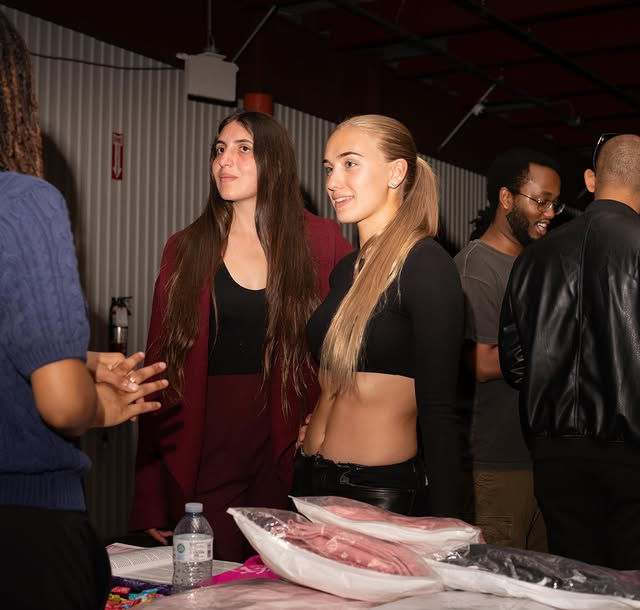
The opening Industry Preview created a more intimate environment for designers, creatives, agencies, scouts, media and press. Attendees could interact directly with designers, preview collections before the runway and shop pieces before they reached the larger audience. The main event, the REDPRINT Runway Show, expanded the traditional runway format into a curated sequence of fashion, sound, immersive visuals and live elements. Then the weekend concluded with an official afterparty in Ottawa’s ByWard Market, extending the experience into music, performance and social connection.

Among the most compelling was a live garment selection produced by a company called Spequlo during the runway show that invited audience members to build everyday looks by combining pieces from different designers. It was a simple shift, but an important one. Instead of asking an audience to remain outside the fashion presentation and simply observe, the experience gave them a role in interpreting it. You could watch people make decisions about silhouette, texture, proportion and personality in real time. Different designers began speaking to one another through the audience, creating combinations that may not have existed within any individual collection. More importantly, people could see themselves in the clothing.

Fashion has spent decades perfecting the art of aspiration, but aspiration becomes more meaningful when the audience can locate itself within the world being presented. The activity transformed the runway from a one-way broadcast into a space for participation, interpretation and personal authorship. As a fashion brand and curator of experiential events, this element of the experience created a moment that you could feel most people in the room hadn’t experienced before. It also points toward a larger shift taking place across fashion: the movement from simply presenting consumers with an image to creating environments in which they can actively participate in the meaning of that image.
That distinction is especially relevant as brands continue to navigate conversations around diversity and representation. Representation can be photographed, posted and packaged in a campaign. Engagement requires something more sustained. It asks whether people are being invited into the process. REDPRINT operates within that tension.
SAI-FI serves as the creative force behind the experience, but REDPRINT is notably not structured as a showcase exclusively for its own label. Instead, the platform creates space for other designers and creatives to occupy the spotlight. SAI-FI describes the experience as an opportunity for emerging talent to enter rooms that can influence the trajectory of a career, connecting designers and creatives with agencies, studios, media and other industry professionals.

In fashion, the room can be as valuable as the runway. A designer may need a buyer, or a model, an agency. The connections between those people are the infrastructure of the fashion industry. This is where the idea of an intentionally created, somewhat unbranded space becomes compelling. When a platform is not exclusively concerned with elevating one name, the value shifts from ownership to connectivity. A platform can establish a stronger identity by consistently demonstrating what it believes. If SAI-FI is positioning itself as a connector of emerging fashion talent, REDPRINT becomes evidence of that identity.
Ottawa is not traditionally the first city named when the global fashion conversation begins. Toronto, Montreal, New York, Los Angeles and Paris tend to dominate the cultural imagination. SAI-FI is not interested in waiting around for Ottawa to be invited into that conversation.
The 2026 experience brought together creatives from more than seven cities across North America, with SAI-FI positioning Ottawa as the meeting point for a much wider creative network. However, us fashion junkies know fashion infrastructure has never been limited to the cities that receive the most press. A city does not become a fashion city just because major houses decide to pay attention to it. It becomes one because designers build, photographers document, stylists collaborate, audiences participate, institutions invest and communities create enough continuity for creative work to sustain itself.
Detroit understands this instinctively. So does Ottawa. The difference between a fashion scene and a fashion ecosystem is infrastructure. A scene can generate attention, while an ecosystem creates pathways. REDPRINT is demonstrating what those pathways can look like long term. The event’s language centers on the idea that to be seen is to be known.

For generations, luxury has been communicated through scarcity: the invitation, the closed door, the inaccessible price point, the distinction between those who belong and those who aspire to be. But as emerging creative communities build their own platforms, another form of value is becoming increasingly visible. A uniquely independent identity can become luxury.
REDPRINT’s model does not eliminate exclusivity. It reframes what the exclusive room can be used for. Rather than creating distance for the sake of status, curated access can create relationships between people who might otherwise remain separated by geography, industry status or professional networks. The question is no longer simply whether emerging creatives are represented. It is whether they have meaningful opportunities to participate, build relationships, influence culture and remain in the conversation.
REDPRINT’s multi-designer runway, industry preview, interactive programming and post-show gathering create multiple points of entry into the fashion ecosystem. The experience gives its audience opportunities to engage, interpret, connect and potentially return with something more valuable than a photograph from the night.
The most consequential fashion platforms are rarely defined solely by the clothes they present. They are defined by the people they connect, the conversations they create and the opportunities that continue after the final walk. REDPRINT is building more than a runway, it’s building a reason for the industry to look beyond the traditional fashion map for innovation and success.


Comments